
Plant-based diets are everywhere right now—and for good reason. They’re great for the environment, can improve heart health, and often make you feel lighter and more energetic.
But here’s the part people don’t talk about enough:
Going plant-based doesn’t automatically mean you’re eating healthy.
You must have also noticed… sometimes people switch to a vegetarian or vegan diet and expect instant results—better skin, weight loss, more energy. But instead, they feel tired, weak, or even confused about what went wrong.
Let’s talk about the hidden nutrition traps in plant-based diets—so you can enjoy all the benefits without compromising your health.
🥗 The “Healthy” Illusion: Not All Plant Foods Are Equal
Just because something is labeled plant-based doesn’t mean it’s nutritious.
You can easily end up eating:
- Refined carbs (white bread, pasta)
- Sugary snacks
- Processed vegan junk food
Yes, even “vegan cookies” and “plant-based burgers” can be loaded with sodium, preservatives, and unhealthy fats.
👉 The result?
Low energy, weight gain, and poor nutrition—despite eating “plant-based.”
⚠️ Trap #1: Not Getting Enough Protein
This is the most common issue.
While plants do contain protein, many people don’t eat enough variety or quantity.
Why it matters:
Protein is essential for:
- Muscle repair
- Hormone balance
- Feeling full and satisfied
Common mistake:
Relying only on roti, rice, and vegetables.
Better approach:
Include diverse protein sources:
- Lentils (dal)
- Chickpeas
- Tofu, paneer
- Soy products
- Nuts and seeds
👉 Think of protein like building blocks—your body needs it daily.
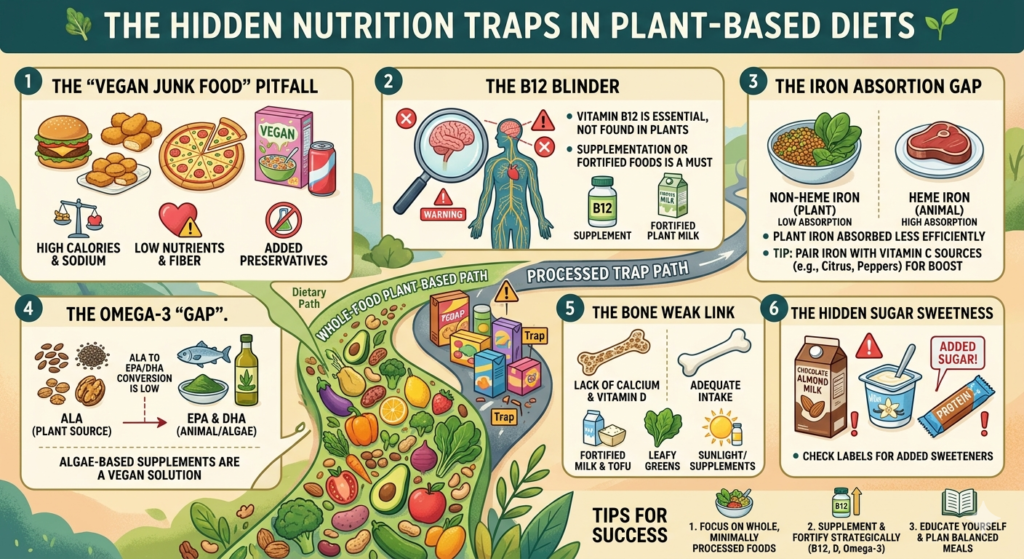
⚠️ Trap #2: Vitamin B12 Deficiency
This is a big one—and often ignored.
Vitamin B12 is mostly found in animal products. So if you’re strictly plant-based, you’re at risk.
Symptoms:
- Fatigue
- Brain fog
- Weakness
- Tingling sensation
Aapne bhi suna hoga—“I’m eating clean but still feel tired.”
This could be a B12 issue.
Solution:
- Fortified foods (plant milk, cereals)
- Supplements (after consulting a doctor)
⚠️ Trap #3: Iron Absorption Problems
Yes, plants contain iron—but it’s non-heme iron, which is harder for your body to absorb.
Signs of low iron:
- Constant tiredness
- Pale skin
- Shortness of breath
Smart trick:
Pair iron-rich foods with Vitamin C.
Example:
- Spinach + lemon juice
- Dal + tomatoes
This simple combo can boost absorption significantly.
⚠️ Trap #4: Omega-3 Fatty Acid Gap
Omega-3 is important for:
- Brain health
- Heart function
- Reducing inflammation
But plant-based diets often lack the active forms (EPA & DHA).
Sources:
- Flaxseeds
- Chia seeds
- Walnuts
Still, conversion in the body is limited.
👉 Many people don’t realize this gap until they experience issues like dry skin or low focus.
⚠️ Trap #5: Overloading on Carbs
Let’s be real—Indian plant-based diets can become very carb-heavy.
- Roti
- Rice
- Potatoes
Without enough protein and fats, this leads to:
- Blood sugar spikes
- Energy crashes
- Increased hunger
Aapne bhi feel kiya hoga—khana khane ke baad bhi bhook lagti hai.
That’s often a sign of imbalance.
⚠️ Trap #6: Calcium Confusion
Without dairy, calcium intake can drop.
Non-dairy sources:
- Sesame seeds (til)
- Almonds
- Leafy greens
- Fortified plant milk
But again—quantity and absorption matter.
Ignoring calcium can affect bone health in the long run.
⚠️ Trap #7: Relying Too Much on Processed Vegan Foods
This is a modern problem.
Plant-based market is booming, and companies are cashing in.
- Vegan nuggets
- Meat substitutes
- Packaged snacks
These might be convenient, but they’re often:
- Highly processed
- High in sodium
- Low in real nutrients
👉 “Plant-based” doesn’t mean “whole food.”
🧠 Real-Life Story
I remember a colleague, Neha, who switched to a vegan diet overnight.
At first, she was excited—posting healthy bowls and smoothies daily. But after a month, she started feeling constantly tired.
Her meals looked like this:
- Breakfast: Fruit smoothie
- Lunch: Rice + sabzi
- Dinner: Salad
Sounds healthy, right?
But she was:
- Low on protein
- Deficient in B12
- Not eating enough calories
After consulting a nutritionist and adding:
- Lentils, tofu
- Nuts and seeds
- B12 supplement
Within weeks, her energy came back.
Lesson?
Plant-based eating needs planning—not guessing.
✅ How to Avoid These Traps
Here’s a simple, practical approach:
✔️ Eat a Variety of Foods
Don’t stick to the same meals daily. Mix grains, legumes, veggies, nuts.
✔️ Prioritize Protein
Add a protein source to every meal.
✔️ Include Healthy Fats
Don’t fear fats—your body needs them.
✔️ Consider Supplements
Especially B12 (and sometimes Vitamin D, Omega-3).
✔️ Focus on Whole Foods
Minimize processed vegan products.
💭 A Balanced Perspective
Plant-based diets can be incredibly powerful for your health—but only when done right.
It’s not about removing animal products.
It’s about replacing them smartly.
Aapne bhi notice kiya hoga—jab diet balanced hoti hai, body automatically respond karti hai: better energy, better mood, better sleep.
🌟 Conclusion: Smart Eating Beats Trendy Eating
Going plant-based is a great choice—but don’t fall into the trap of thinking it’s automatically perfect.
Listen to your body. Learn what it needs. Adjust accordingly.
Because at the end of the day,
it’s not about following a trend—it’s about nourishing yourself properly.
If you do that, a plant-based lifestyle can truly be one of the best decisions you make.

